

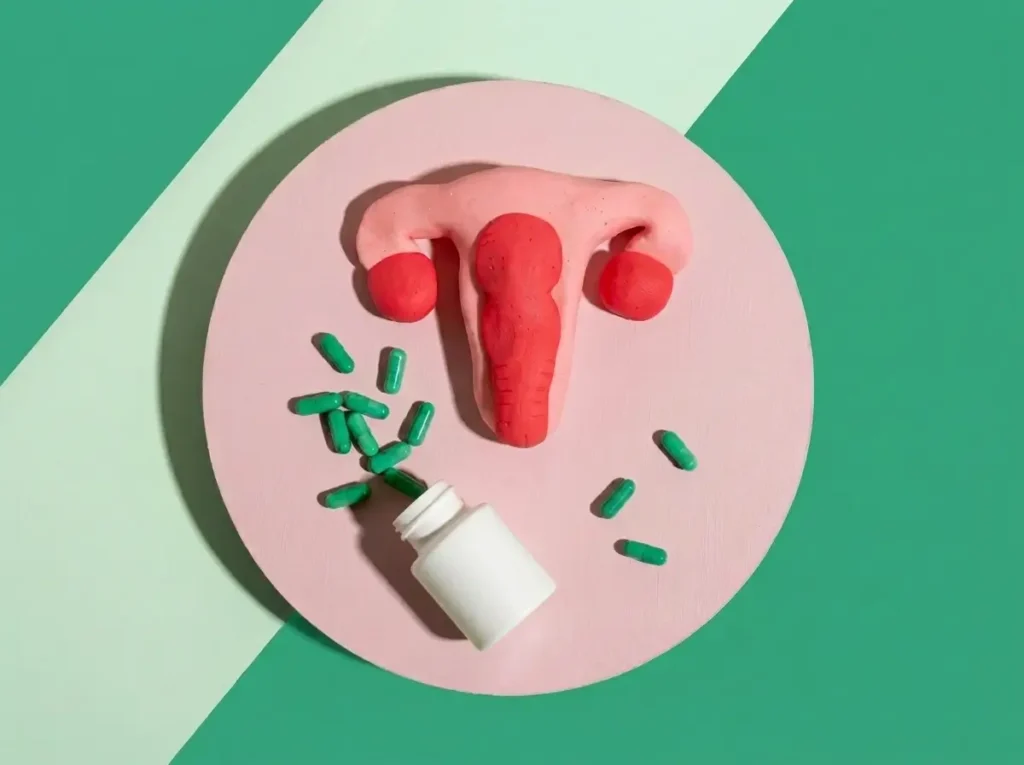
Polycystic ovary syndrome affects 1 in 10 women of reproductive age. One of its most effective nutritional interventions remains underutilised — research on inositol isomers is quietly revolutionising PCOS care
PCOS and Insulin Resistance
PCOS is fundamentally a metabolic disorder — insulin resistance is present in 65–70% of cases regardless of body weight. It amplifies LH secretion, stimulates ovarian androgen production, and suppresses SHBG, disrupting ovulation and raising risk of type 2 diabetes and cardiovascular disease.
The Two Inositols
Myo-Inositol (MI) is the predominant body form, involved in FSH signalling and oocyte quality. D-Chiro-Inositol (DCI) is its metabolite, acting in muscle/fat insulin signalling and ovarian androgen metabolism. In PCOS, the enzymatic conversion between them is disrupted.
The 40:1 Ratio
In healthy plasma, MI and DCI exist in a 40:1 ratio. Supplementing 2000mg MI + 50mg DCI (the 40:1 ratio) is designed to restore this physiological balance. Clinical trials show this combination improves oocyte quality, menstrual regularity, androgen levels, and insulin sensitivity.
Evidence Summary
A 2019 systematic review found combined inositol therapy restored menstrual regularity in 73% of oligomenorrhoeic PCOS patients within 3–6 months. A 2020 meta-analysis in Nutrients confirmed improvements in fasting insulin, HOMA-IR, triglycerides, and BMI — comparable to metformin, without GI side effects.
- Standard dose: 2000mg MI + 50mg DCI twice daily (4000mg + 100mg total)
- Menstrual regularity improvements: typically within 3 months
- Full metabolic benefits: observed at 6 months of consistent use
- Safety: no serious adverse effects reported at therapeutic doses
Inositols address the root cause of PCOS — impaired insulin signalling — at the cellular level, not just the symptoms.
References: Unfer et al. (2017) Int J Endocrinol; Pkhaladze et al. (2020) Nutrients; Monastra et al. (2019) Reprod Biomed Online.